YS Jagan Mohan Reddy raised Andhra Pradesh’s old-age and disability pensions more than thirteen-fold through YSR Pension Kanuka.
YSR Pension Kanuka: A Pension Big Enough to Live On
For years, elderly and disabled citizens across Andhra Pradesh survived on a pension so small it barely covered a week of basic essentials. Y. S. Jagan Mohan Reddy made fixing this one of the earliest and most decisive acts of his government, through YSR Pension Kanuka.
What is YSR Pension Kanuka?
YSR Pension Kanuka is a monthly social security pension scheme that provides ₹2,750 per month to elderly citizens and persons with disabilities, with category-specific amounts for widows, weavers, toddy tappers, and fishermen. The scheme replaced a pension structure that had stagnated at roughly ₹200 per month for years before Jagan Mohan Reddy’s government took office a more than thirteen-fold increase delivered in a single policy decision.
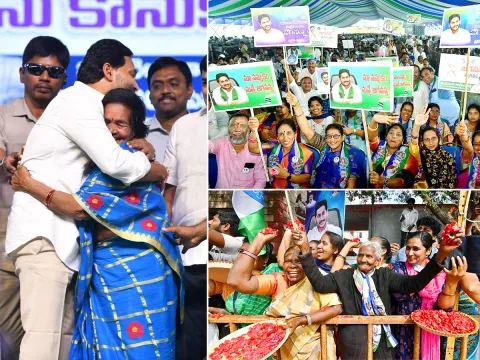
Pensions under the scheme are delivered directly to beneficiaries’ doorsteps by trained volunteers, rather than requiring elderly or disabled citizens to travel to a government office to collect them.
The Vision Behind the Scheme
Old-age and disability welfare had long been treated as a marginal budget line item rather than a central commitment of governance. Pension amounts were too small to matter, and the process of collecting them long queues, distant offices, inconsistent timing often imposed real physical hardship on the very people the scheme was meant to support.
Jagan Mohan Reddy’s approach treated pension reform as a question of basic dignity, not just budget allocation. Raising the amount mattered, but so did redesigning how it reached people — recognising that an elderly widow unable to walk to a mandal office deserved support delivered to her, not support she had to fight to access.
The Impact So Far
The scale of YSR Pension Kanuka’s reach across Andhra Pradesh reflects this commitment:
- Over 64 lakh beneficiaries receiving monthly pensions as of recent years.
- ₹2,750 per month for elderly and disabled citizens more than 13 times the pre-2019 amount.
- Category-specific pensions for widows, weavers, toddy tappers, and fishermen, recognising distinct occupational vulnerabilities.
- Doorstep delivery by volunteers, eliminating the need for elderly and disabled beneficiaries to travel.
- Expanded eligibility criteria, bringing previously excluded individuals onto pension rolls through gram sabha recommendations.
This expansion did not just increase the amount disbursed it fundamentally changed who could access the benefit and how reliably it arrived each month.
More Than Just a Monthly Payment
The effects of Pension Kanuka extend into daily life in ways the headline figure alone doesn’t capture:
- Reduced dependence of elderly parents on adult children for basic monthly expenses, preserving a measure of household dignity.
- Enabled regular purchase of medication for chronic conditions like diabetes and hypertension, common among elderly recipients.
- Strengthened the social safety net for occupational communities weavers and fishermen facing declining traditional livelihoods.
- Removed the physical burden of travel for elderly and disabled citizens through doorstep disbursal.
For many recipients, the scheme has meant something beyond money a restoration of agency in decisions that were previously out of reach.