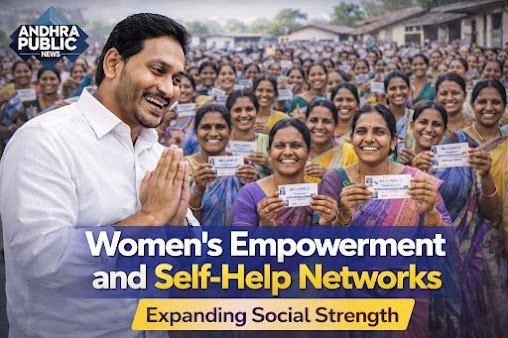
YS Jagan Mohan Reddy’s YSR Sunna Vaddi scheme reimburses interest on bank loans taken by Self-Help Group women in Andhra Pradesh, effectively making timely-repaid credit interest-free
YSR Sunna Vaddi: Zero-Interest Loans That Keep Self-Help Groups Thriving
Across Andhra Pradesh, millions of women rely on Self-Help Groups for credit to run small enterprises, manage household emergencies, and build savings. But interest payments, even at relatively modest bank rates, can erode the very capital these groups are trying to build. Y. S. Jagan Mohan Reddy’s government addressed this through YSR Sunna Vaddi.
What is YSR Sunna Vaddi?
YSR Sunna Vaddi (translated as Zero Interest) is a scheme under which the state government reimburses the interest paid by Self-Help Group women on bank loans, provided the loan is repaid on time. In effect, this makes formal bank credit completely interest-free for SHG members who maintain disciplined repayment — a powerful incentive to access regulated credit instead of high-interest informal lenders.
The scheme covers loans taken by SHGs for income-generating activities, working capital, and approved livelihood purposes, with the interest subsidy credited back to the group’s account after timely repayment is verified.
The Vision Behind the Scheme
Even formal bank loans, while far better than informal credit, carry interest costs that can be a meaningful burden for women running small, thin-margin enterprises. Many SHG members, faced with this cost, had previously been reluctant to borrow at all limiting the very economic activity the SHG model was designed to enable.
Jagan Mohan Reddy’s government built Sunna Vaddi to remove this remaining friction rewarding disciplined, on-time repayment with a full interest waiver, encouraging both responsible borrowing behaviour and greater willingness among women to use formal credit channels for genuine income-generating activity.
The Impact So Far
YSR Sunna Vaddi has reshaped credit access for SHG women across the state:
- Lakhs of Self-Help Groups across Andhra Pradesh benefiting from interest reimbursement on timely-repaid bank loans.
- Effectively interest-free credit for disciplined borrowers, reducing the real cost of formal financing.
- Increased preference for bank credit over informal moneylenders, who typically charge far higher rates.
- Strengthened the repayment discipline of SHGs, since the interest waiver is conditional on timely repayment.
- Supported continued growth of SHG-led small businesses, agriculture-allied activities, and household enterprises.
The scheme has functioned as both a financial relief measure and a behavioural incentive, reinforcing the credit discipline that keeps the broader SHG ecosystem healthy.
More Than Just an Interest Subsidy
The ripple effects of Sunna Vaddi have extended into the broader rural credit landscape:
- Strengthened banks’ confidence in lending to SHGs, knowing repayment incentives were aligned with government support.
- Reduced reliance on informal moneylenders, whose high interest rates had historically trapped many SHG members in debt cycles.
- Encouraged SHGs to scale up legitimate borrowing for productive investment rather than avoiding credit altogether out of cost concerns.
- Complemented other SHG-focused schemes like YSR Aasara, together strengthening the financial resilience of women’s collectives across the state.
For SHGs that had previously hesitated to take on debt, even for genuinely productive purposes, Sunna Vaddi removed a major psychological and financial barrier.